

Los organizadores de ISPIM nos han hecho entrega de todos estos libros sobre innovación que encontraréis en nuestra Biblioteca personal:

Digital Disruptive Innovation. Joe Tidd (ed.). World Scientific. Series on technology management. vol. 36, 2020.
There is no doubt that digital technologies have the potential for disruptive innovation in a wide range of sectors, both in manufacturing and services, and the commercial and social domains. However, popular commentaries on the potential of digital innovation to disrupt have suffered from two extreme positions: either, simplistic technological determinism, often promoted by technology vendors, claiming that the impending widespread automation of products and services will provide step-changes in productivity and new products and services; or alternatively, very high-level broad discussions of business model innovation in traditional sectors, private and public. However, the impacts will not be universal, and the outcomes will be highly-differentiated. More fundamentally, neither a narrow technological perspective or broad business view adequately captures the appropriate level of granularity necessary to understand the potential and challenges presented by digital innovation. In this book, Digital Disruptive Innovation, we apply innovation concepts, models and research to provide greater insights into strategies for, and management of, digital innovation.

Managing knowledge, absorptive capacity and innovation. Joe Tidd (ed.). World Scientific. Series on technology management. vol. 37, 2021.
Knowledge Management focuses on identifying, sharing, storing, and exploiting internal knowledge, whereas Open Innovation is more concerned with sources of external knowledge. However, this simple dichotomy between open and closed approaches is unhelpful and not realistic. Instead, it is the interaction between internal and external knowledge that creates dynamic capabilities and the ability to innovate. In particular, we need to better understand the interactions between internal and external knowledge, and how these influence innovation outcomes under different conditions. This edited volume, Managing Knowledge, Absorptive Capacity, and Innovation, provides an opportunity to combine contemporary interests in Open Innovation with the classic notion of absorptive capacity, to better understand how organisations can manage the absorption and exploitation of inbound external sources of knowledge in order to innovate.
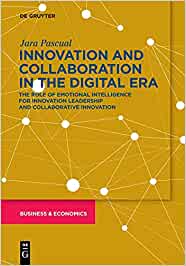
The role of emotional intelligence for innovation leadership and collaborative innovation. Jara Pascual. De Gruyter, 2021
Innovation and Collaboration in the Digital Era provides a holistic approach to collaborative innovation, innovation management and innovation leadership. It is full of practical advice and includes 34 interviews with high-level politicians, innovation industry leaders, academics and entrepreneurs discussing the reality of innovation and how to create change for a positive impact. Many quotes are included from researchers and practitioners in the innovation field who have participated as guests in the author’s podcast “Business of Collaboration” or in interviews with the Collabwith Magazine which she produces.

Supply ecosystems: interconnected, interdependent and cooperative operations, supply and contract management. Douglas Kinnis Macbeth. World Scientific, 2019
This book attempts to address the lack of connectedness between topics that have traditionally been dealt with as discrete and self-contained. By reflecting on how these topic areas work together and have the capability to offer businesses a complete supply capability to complement the customer focus of sales and marketing, this book provides a holistic view of how the whole of the supply side of a business can be coordinated and provide support to competitive advantage.

Transformation Dynamics in FinTech: an open innovation ecosystem outlook. Dimitrios Salampasis, Anne-Laure Mention (ed.). World Scientific, 2022
Technology-driven innovation in financial services has been attracting global attention and interest. FinTech innovation is presenting a paradigm shift in financial services affecting a wide range of products, processes and services but also sparking a broader evolutionary transformation, growth opportunities and foundational systemic and structural changes in light of technological interdependencies among market players, infrastructures and ecosystem stakeholders. Transformation Dynamics in FinTech contributes to the intellectual curiosity around the symbiotic relationship of finance and technology by focusing on the multidimensional and multidisciplinary role of open innovation within FinTech innovation, observing and communicating the latest technological, managerial, governance, policy and regulatory perspectives, trends and developments. This book is an essential reading for anyone interested in the growing and evolving development of FinTech ecosystems based on new capabilities and structures that create new dominant architectural designs, which determine competitive dynamics, products, services, processes, business models, markets, value chains, within an open and transformed financial services industry landscape.

Emerging issues and trends in innovation and technology management. Alexander Brem (ed.). World Scientific, 2022
This book is a compilation of papers published in International Journal of Innovation and Technology Management. The chapters in the book focus on recent developments in the field of innovation and technology management. Carefully selected on the basis of relevance, rigor and research, the chapters in the book take the readers through various emerging topics and trends in the field.Written in a simple and accessible manner, the chapters in this book will be of interest to academics, practitioners and general public interested in knowing about emerging trends in innovation and technology management.

Toward responsible innovation: responsibility and philosophy for a humanely sustainable future. Xavier Pavie. World Scientific, 2022
For fifty years, innovations have taken on a new dimension: the Internet, DNA sequencing, genomic manipulations, advances in transhumanism, nanotechnologies … and much more. These recent innovations are not without addressing new issues whose consequences are as important as irreversible. The innovator, of whom Steve Jobs and Mark Zuckerberg are emblematic contemporary figures, appears as a personality as brilliant as he is destructive, who aspires to change the world regardless of the violence that may ensue. With this then, emerges the need to establish responsible innovation, in which the innovator should be accountable for his actions and review his position as a hero. To establish this new ethic, philosophy is a necessary recourse, since it questions, among other things, the self-control of the Stoics, the prudence of Aristotle, respect of Kant, the will power of Nietzsche and the power of Foucault.

The case for patents. Daniel Spulber. World Scientific, 2021
The Case for Patents offers an affirmative case for the many economic benefits of the patent system and shows how patents provide incentives for invention, innovation, and technological change. The discussion highlights the many contributions of patents to economic growth and development. The Case for Patents helps restore balance to public policy debates by recognizing the important contributions of the patent system.
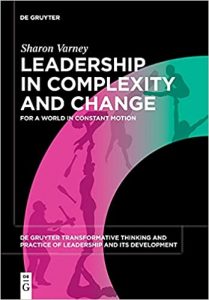
Leadership in complexity and change: for a world in constant motion. Sharon Varney. De Gruyter, 2021
‘Leadership in Complexity and Change’ draws on complexity science to paint a picture of a world in constant motion, where leadership is enacted in-the-midst of complexity and continuous change. Part One brings complexity science to life by considering the practical challenges of complexity and its implications for leadership. Part Two then considers how leaders can reinvigorate existing tools and approaches with a new mindset, before offering some new tools and techniques for leadership in complexity and change. Part Three concludes by considering the practice and practices of leadership in complexity and change. The key ideas in this book are brought to life through mini-cases and practical examples, which are embedded throughout the book.

Catalyzing innovations for a sustainable future: bite-sized commentaries and resource materials. Thomas Menkhoff. World Scientific, 2021
This reader contains several «op-eds» (op-ed = short for «opposite the editorial page») on innovation management and urban sustainability matters written between 2012 and 2021 for Singapore-based print media aimed at providing interested readers with deeper insights into key enablers of effective innovation governance at corporate levels. The bite-sized commentaries on innovation matters are loosely structured with regards to Leadership & Strategy, People & Organisational Culture, Innovation Processes, Knowledge & Learning as well as Innovation Governance. Besides three case studies of innovation award winners (Singapore Airlines; National Library Board Singapore; Qian Hu Corporation Ltd.), the book also entails reflections about the «smart city» strategies of Singapore, Berlin (Germany) and Barcelona (Spain) aimed at enhancing sustainability and liveability.

International journal of innovation management.
- Vol. 24. nº8 (December 2020). (2 ejemplares)
- Vol. 25. nº7 (September 2021). (2 ejemplares)
- Vol. 25. nº3 (April 2021).
- Vol. 25. nº4 (May 2021).
- Vol. 25. nº5 (June 2021).
- Vol. 25. nº6 (August 2021).